

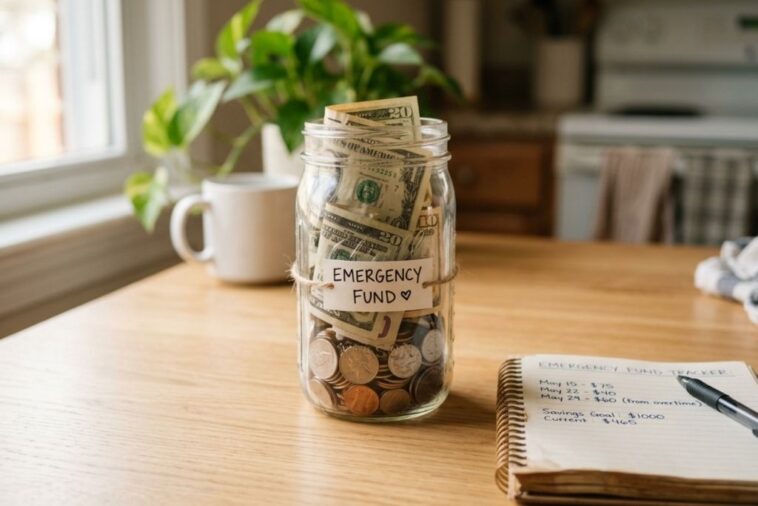
Most financial advice assumes you have money left over at the end of the month. If you are earning an average salary and covering rent, food, and transport, that assumption falls apart quickly. But an emergency fund is not built by finding a large sum of spare cash. It is built by making saving automatic, small, and boring.
Start with a number that feels achievable
The standard advice is three to six months of expenses. For someone on a modest income, that figure can feel so distant that it kills motivation before the first deposit. Set a starter goal of $500 or $1,000 instead. That amount covers the majority of genuine emergencies: a car repair, an urgent dental visit, a broken appliance. Once you reach it, you can extend the target.
Automate before you can spend it
The single most effective tactic is a standing transfer that moves money into a separate savings account on payday. Not at the end of the month, and not when you remember. Payday. Even $25 per paycheck adds up to $650 a year. If your bank allows it, open the savings account at a different institution so the balance is not visible every time you check your current account.
Find money in your fixed costs, not your fun
People usually try to cut coffee and takeaway first. Those are small, painful, and easy to abandon. Fixed costs are where the real savings sit. Call your phone provider and ask for a lower plan. Review subscriptions you have not used in two months. Compare insurance premiums at renewal instead of auto-renewing. Renegotiating three bills can free up more per month than a year of skipped lattes, and it requires the decision only once.
Use irregular income deliberately
Tax refunds, work bonuses, cash gifts, and side gig payments are the fastest way to build a cushion because they were never part of your monthly plan. Commit in advance to sending a fixed percentage of any windfall straight to savings. Fifty percent is a reasonable split that still leaves room to enjoy the money.
Keep it accessible but slightly inconvenient
An emergency fund needs to be reachable within a day or two, which rules out investments and long term deposits. A high yield savings account is ideal. What you want to avoid is having the money sit in your everyday spending account where it quietly gets absorbed. Some people remove the debit card linked to the savings account entirely.
Define what counts as an emergency
This matters more than people expect. Write down your own definition before you need it. A genuine emergency is unexpected, necessary, and urgent. A sale on a laptop is none of those things. Having a written rule removes the negotiation you would otherwise have with yourself at a weak moment.
Rebuild without guilt
You will use the fund. That is the point. When it happens, do not treat it as failure. Restart the automatic transfer and rebuild. The purpose of the fund is to stop an unexpected expense from turning into debt, and if it did that, it worked exactly as intended.
Progress will feel slow for the first few months. Around month six, the balance starts to look like real money, and that is usually when the habit becomes self sustaining.